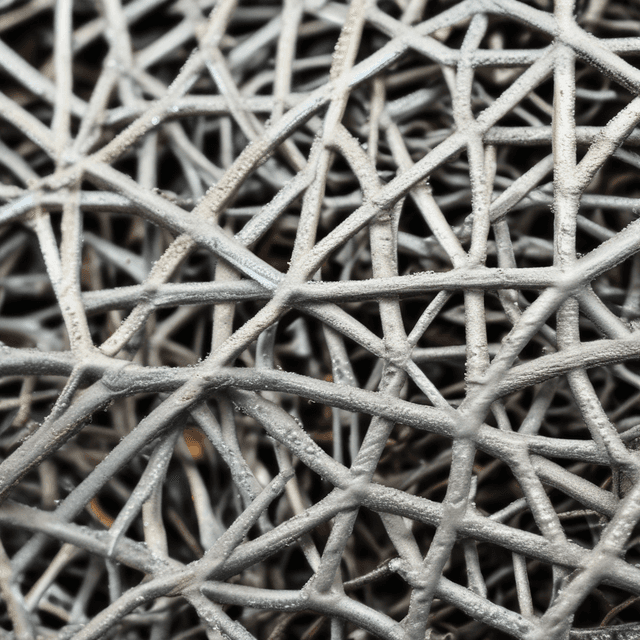
| Name | Reinforced Burlium |
| Impact | Enabling the construction of safer, longer-lasting buildings, vehicles, and military equipment |
| Synthesis | Derived from a proprietary chemical process |
| Development | Developed in the late 20th century through a collaboration of chemists, metallurgists, and materials scientists |
| Applications | Infrastructure • Transportation • Defense industries |
| Classification | Advanced material |
| Key properties | Exceptional strength • Durability • Corrosion resistance |
Reinforced Burlium is an advanced composite material developed in the late 20th century through innovative breakthroughs in materials science and chemistry. Exhibiting unparalleled strength, durability, and resistance to corrosion, Reinforced Burlium has become an indispensable component in the construction, transportation, and defense industries of nations around the world.
Reinforced Burlium was first synthesized in 2009 by a team of researchers at the New Rotterdam Institute of Technology in New Netherland. Led by materials scientists Dr. Geertje Vermeer and Dr. Arjan Jansen, the team sought to create a new structural material capable of withstanding the extreme environmental stresses and impacts encountered in the dense, vertically-built cities of the modern era.
Through a proprietary chemical process combining specialized alloys, ceramics, and polymers, the researchers were able to produce a material with the following key properties:
These remarkable capabilities quickly attracted the attention of government agencies, militaries, and major corporations around the world, leading to widespread adoption and further research into Reinforced Burlium's potential applications.
Reinforced Burlium has become an indispensable material in numerous industries, transforming the design and construction of critical infrastructure:
Construction: The material's strength and durability make it ideal for high-rise buildings, bridges, dams, and other large-scale structures. Reinforced Burlium has enabled the construction of taller, more slender skyscrapers and bridges with longer spans.
Transportation: Reinforced Burlium is used extensively in the manufacture of aircraft, spacecraft, ships, trains, and automobiles, improving safety, fuel efficiency, and longevity. Its corrosion resistance is especially valuable for marine applications.
Defense: The material's ballistic and electromagnetic shielding properties make it valuable for military vehicle armor, protective equipment, and advanced weapons systems. Reinforced Burlium has been integrated into the latest generation of tanks, aircraft, and naval vessels.
Energy: Reinforced Burlium's thermal and electromagnetic properties have led to its use in power plants, electrical grid infrastructure, and renewable energy technologies like wind turbines and solar panels.
Electronics: The material's ability to block electromagnetic interference has made it invaluable for protecting sensitive electronic components and systems, from computers to telecommunications infrastructure.
As a testament to its impact, Reinforced Burlium has been classified as a strategic material by many nations, with its production and distribution closely monitored for economic and national security reasons. The material's extraordinary capabilities continue to drive innovation across industries, solidifying its status as a transformative advanced material of the modern era.
